USB
The most common way of connecting peripherals is via USB
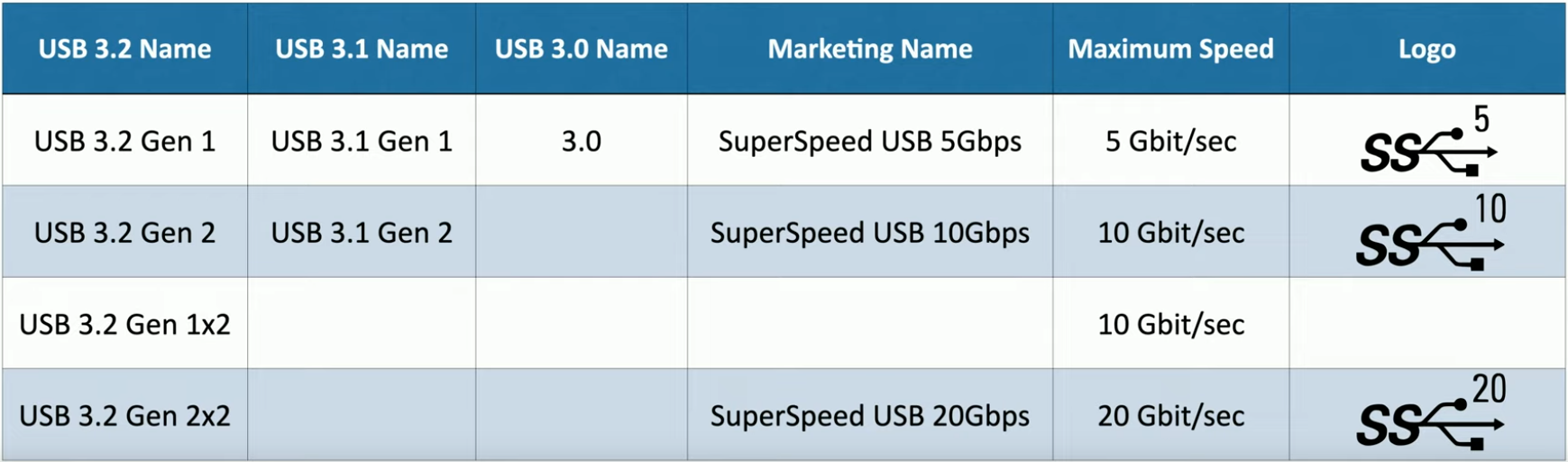
USB cables have many types of connectors, which have changed over time. USB-C fixes this by establishing a universal connector, but does not describe the signal itself.
Thunderbolt
another type of high speed serial connector is thunderbolt, which allows for data and power on the same cable. It is based on the Mini DisplayPort standard.
V1 has two channels, 10 Gbit/s per channel for a total of 20 Gbit/s.
v2 aggregates the channels to allow a 20Gbit/s connection for all data.
v3 uses USB-C as a standard connector and allows for an aggregated throughput of 40Gbit/s.
They can be set up with copper wire (up to 3 meters) or optical (up to 60 meters), and allow for daisy chaining up to 6 devices.
Serial console cables
Serial console cables are an older standard that is sometimes still used. Tye are known as D-subminiature or D-sub, where the D refers to the size of the connector.
Commonly used for RS-232 signals, oftem for modems, printers, mice, networking, but only in older settings.