Mobile device connectivity has changed over the years, and is used for synchronization, connectivity, backup,metc.
The majority of the primary connection type on mobile devices is the Universal Serial Bus, which enables high-speed communication and can be used for charging and data transfers.
USB Types:
- Micro-USB
- Smaller USB connection
- Very common
- Mini-USB
- Older type that is not so common anymore
- USB-C connection
- Used on both device and computer
- They are 24-pin double sided connectiors
- Acts as a USB 2.0/3.0/3.1/4
- Can provide:
- DisplayPort
- HDMI
- Thuinderbolt
Apple has a lightning 8-pin proprietary connector. It has the advantage of a higher power output than a micro-USB.
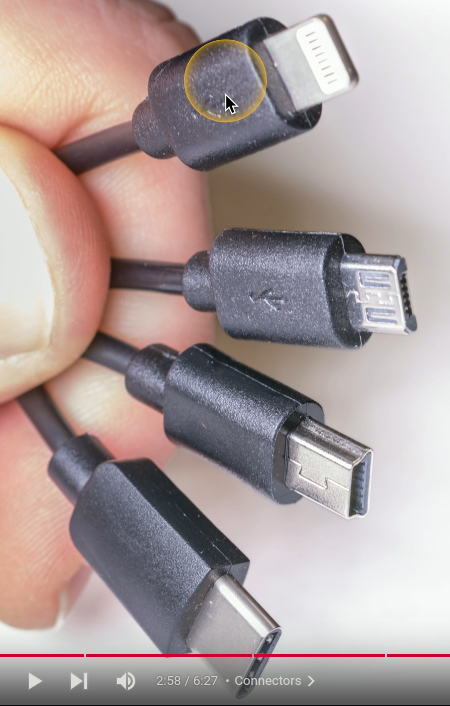
In order from top: lightning, micro-USB, mini-USB, USB
Serial interfaces
Prior to the usage of universal serial bus interfaces, we used serial communication commonly with a DB-9 connection (also referred to as DE-9):
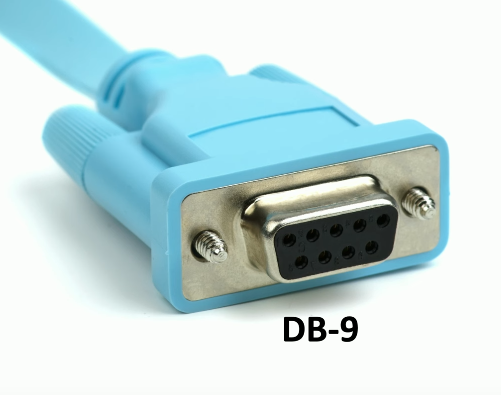
They are used to transport RS-232 signals, which is a standard that has been in place since 1969. Commonly these connectors are still found in infrastructure to connect consoles, routers, etc.
The similarity to VGA is simply in the looks - VGA is a 15 pin connector, while DE-9 is a 9-pin connector.
NFC
Near Field Communication send small amounts of data over a limited area. It is built into phones, for example, and can be used for payment systems, transportation, in-person information exchanges, as well as access tokens and identity - the short range still has encryption support.
Bluetooth
Hotspot
You can use your mobile device to create a personal wireless router and extended the cellular data network to all your devices via 802.11. Note that this may require charges and data costs.